You may invest hundreds of thousands in building a sports court, but a single mistake during the first stage can significantly reduce its lifespan.
At first glance, multi-purpose courts may appear similar, but the real difference lies in how they are constructed. Two projects may have the same size and layout, yet differ greatly in quality, durability, and maintenance costs due to the construction process, the materials used, and the contractor's commitment to technical standards.
Understanding the multi-purpose court construction steps not only helps you follow every stage of the project, but also enables you to evaluate quotations, choose the right contractor, and ensure your court meets users' needs for many years. Whether you are planning a court for a school, sports club, university, or residential community, following the correct construction process is the foundation of a successful project.
Why Have Multi-Purpose Courts Become the Preferred Choice for Many Projects?
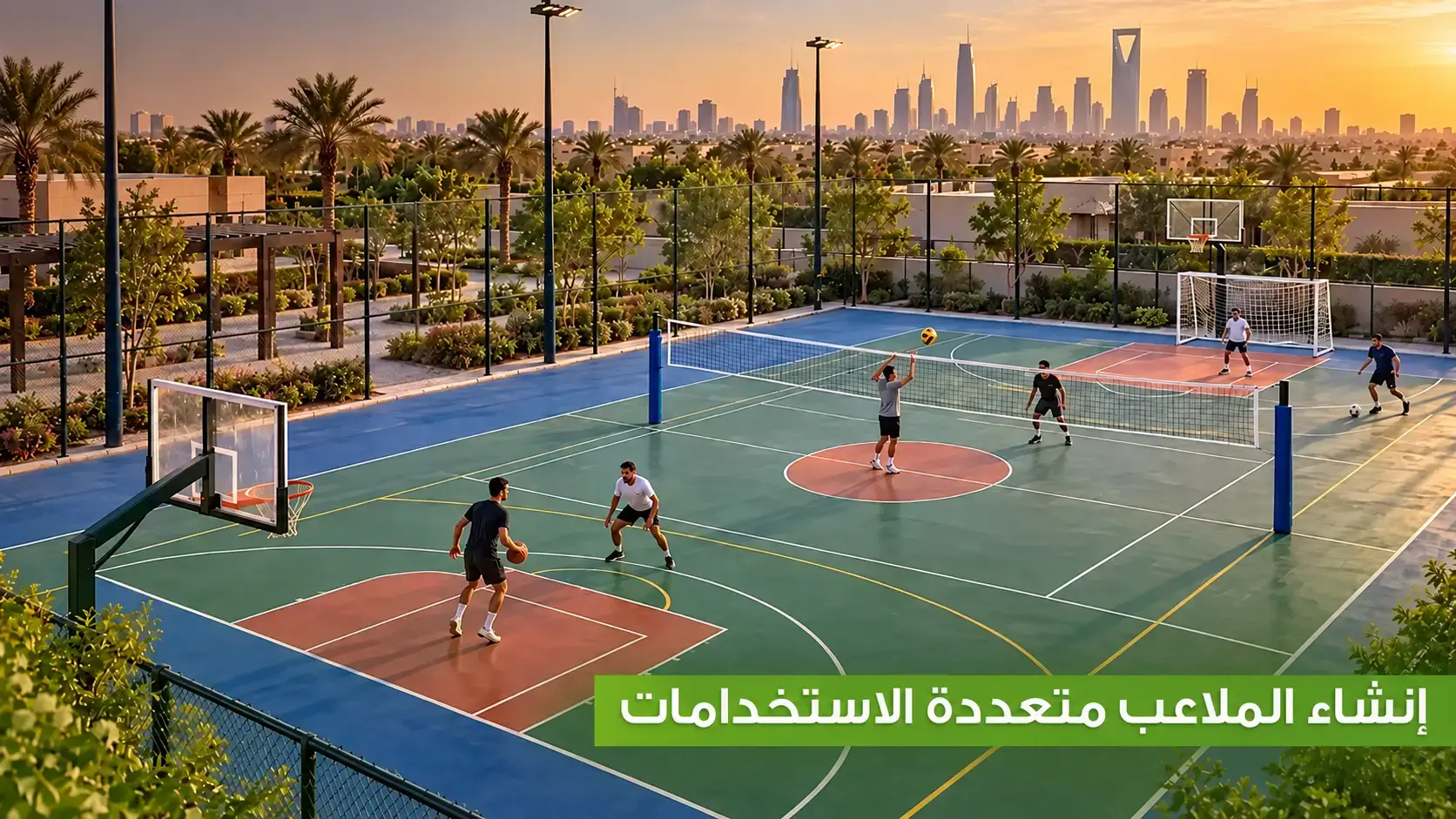
Many schools, universities, municipalities, sports clubs, and residential developments are choosing multi-purpose courts because they allow multiple sports to be played within a single facility. This maximizes available space while reducing construction costs compared to building several separate courts.
These multi-use courts also offer exceptional flexibility, allowing the same court to accommodate basketball, volleyball, handball, tennis, and other sports depending on the project's requirements. For this reason, the multi-purpose court construction steps always begin with understanding the project's objectives before selecting the most suitable design to maximize space without compromising sports performance.
What Is the First Step in Multi-Purpose Court Construction?
The multi-purpose court construction steps begin long before construction equipment arrives on-site. The first stage focuses on thoroughly studying the project to understand its objectives and operational requirements.
This stage typically includes:
- Identifying the sports the court will accommodate.
- Inspecting the site and measuring the available space.
- Evaluating soil conditions and site elevation.
- Estimating the expected number of users.
- Reviewing safety and operational requirements.
- Preparing an initial concept for the court layout and sports equipment.
This planning stage helps determine the most suitable solutions from the beginning while minimizing the likelihood of design changes during construction that may increase both project duration and cost.
You can also explore Multi-Purpose Courts (Multi Courts) solutions to identify the design and sports configuration that best suits your project before construction begins.
Why Is Site Assessment an Essential Stage Before Construction?
Even if a site appears suitable, it may still require grading, soil improvement, or infrastructure preparation. That is why professional contractors always begin with a comprehensive site inspection before construction starts.
This stage is a critical part of the multi-purpose court construction steps because it helps:
- Identify excavation and filling requirements.
- Plan an effective drainage system.
- Select the appropriate foundation system.
- Determine the best court orientation based on the site's characteristics.
- Estimate the construction schedule more accurately.
The more detailed the site assessment is, the more efficient the construction of multi-use courts becomes, while significantly reducing the risk of future structural or operational issues.
How Does the Design Determine the Success of the Project?
Once the site assessment is complete, the project moves to the design phase, where detailed construction drawings are prepared. These plans translate the client's requirements into a practical layout that includes court dimensions, game line markings, flooring systems, lighting locations, fencing, and sports equipment.
The design stage is not only about appearance; it defines how every part of the project will be executed. For this reason, it represents one of the most important multi-purpose court construction steps, ensuring the final court delivers operational efficiency, ease of use, and maximum utilization of the available space.
What Are the Main Multi-Purpose Court Construction Steps After the Design Is Approved?
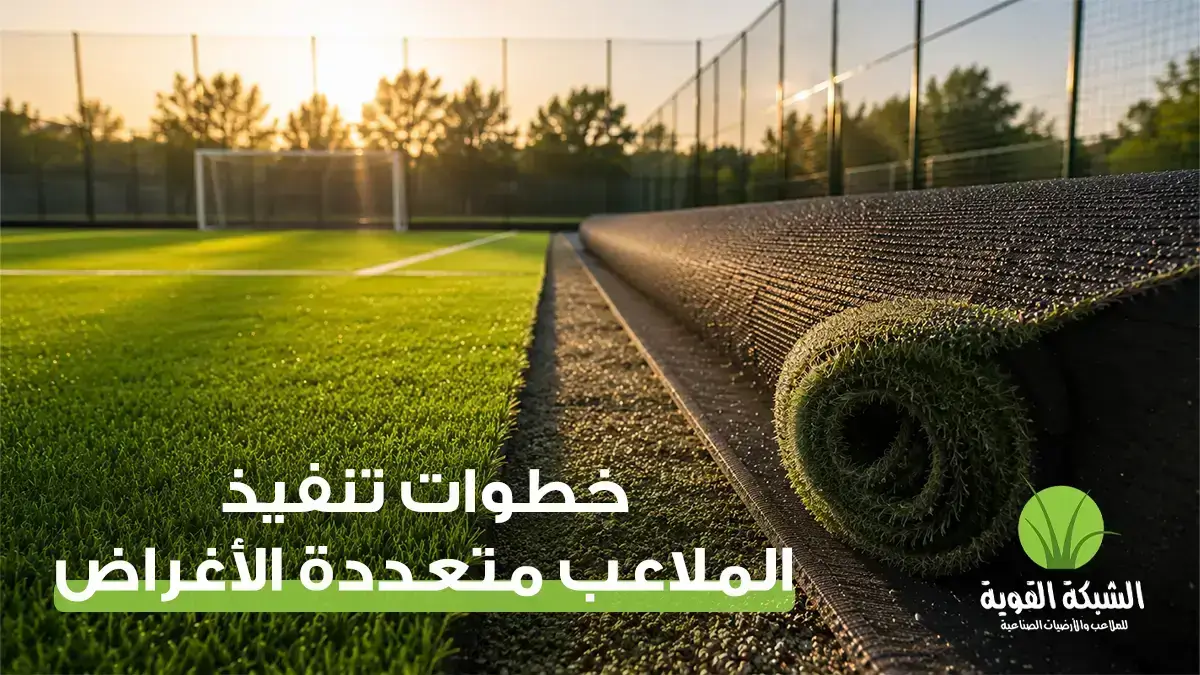
After the design and construction drawings receive approval, the actual construction process begins. The project progresses through several consecutive stages to ensure quality and long-term performance, including:
- Site preparation and infrastructure work.
- Foundation layers and base preparation.
- Installation of the selected sports flooring system.
- Construction of lighting and drainage systems.
- Installation of sports equipment and perimeter fencing.
- Final inspections, quality testing, and project handover.
How Is the Right Sports Flooring System Chosen?
Selecting the flooring system is one of the most important multi-purpose court construction steps, as it directly affects sports performance, maintenance costs, player safety, and the court's overall lifespan.
The most commonly used sports flooring systems include:
- Acrylic flooring for basketball and tennis courts.
- Rubber flooring for areas requiring greater shock absorption.
- Artificial turf for football fields and multi-use outdoor courts.
- Indoor sports flooring designed for gymnasiums and indoor facilities.
The flooring should always be selected according to the project's intended use rather than price alone. Making the right choice helps reduce long-term maintenance costs and extends the court's service life.
For additional technical guidance, you can refer to the FIFA Quality Programme or ITF Tennis Tech.
Why Are Drainage and Lighting Systems Essential for High-Quality Court Construction?
An efficient drainage system protects the sports surface from water accumulation, while a properly designed lighting system provides uniform illumination, allowing the court to be safely used during evening hours without affecting visibility.
This stage typically includes:
- Installing an effective drainage network.
- Erecting lighting poles.
- Positioning floodlights to ensure even light distribution.
- Testing illumination levels before project handover.
When Is Sports Equipment Installed?
After the sports flooring and all construction work have been completed, the installation of sports court accessories and equipment begins. This is the stage that prepares the court for safe and efficient use.
The equipment varies depending on the sports the court is designed to accommodate, but it generally includes:
- Football goals.
- Volleyball nets.
- Tennis posts.
- Basketball hoops.
- Court line markings.
- Perimeter fencing.
- Entrance gates.
- Players' benches, when required.
Each component is installed according to the approved design to ensure compatibility with every activity that will take place on the multi-use courts.
If you are planning a new project, be sure to explore Sports Court Equipment & Accessories to select the equipment that best matches your court design and operational requirements.
How Do Contractors Ensure Quality Before Project Handover?
The multi-purpose court construction steps do not end once installation is complete. Every project undergoes a series of inspections and technical tests to verify that all work complies with the required specifications.
These inspections typically include:
- Checking floor levelness.
- Verifying court dimensions.
- Inspecting the accuracy of game line markings.
- Testing the lighting system.
- Examining the stability of sports equipment.
- Evaluating the efficiency of the drainage system.
- Correcting any issues before final handover.
These quality checks ensure that the court is fully operational and ready for use without requiring modifications after opening.
What Common Mistakes Reduce the Quality of Multi-Purpose Courts?
Most early maintenance problems result from mistakes made during construction rather than during operation. Avoiding these issues helps preserve the quality of the project and extends the court's service life.
The most common mistakes include:
- Starting construction without conducting a proper site assessment.
- Selecting flooring that does not match the intended use.
- Using low-quality construction materials.
- Neglecting drainage system design.
- Applying inaccurate court line markings.
- Hiring a contractor with limited experience in building multi-purpose courts.
For this reason, the multi-purpose court construction steps involve much more than construction work alone. They include careful planning, selecting appropriate materials, and following technical standards throughout every stage to ensure a sports facility that delivers long-term quality, safety, and operational efficiency.
Why Is alshabakasports the Right Choice for Multi-Purpose Court Construction?
If you are looking for a company with extensive experience in constructing multi-purpose courts according to the highest technical standards , alshabakasports provides comprehensive solutions that begin with project assessment and design, continue through every construction phase, and conclude with final project delivery.
The company follows carefully planned multi-purpose court construction steps that take into account the nature of the sports activities, site dimensions, and expected number of users, while selecting high-quality materials and equipment that achieve the ideal balance between durability, performance, and cost.
alshabakasports also delivers complete multi-use court solutions tailored to the needs of schools, universities, sports clubs, municipalities, and residential developments, while maintaining strict compliance with technical specifications and project schedules throughout every phase.
Build Your Project on a Strong Foundation
Let the experts at alshabakasports support your project from the initial site assessment and design phase through final construction and handover. With a commitment to quality at every stage, we help you build a sports court that delivers outstanding performance and long-lasting value.
Frequently Asked Questions About Multi-Purpose Court Construction?
1. What Is a Multi-Purpose Court?
A multi-purpose court is a sports facility designed to accommodate more than one sport within the same playing area. It includes clearly marked zones for different games and can be equipped with various flooring systems and sports equipment to suit activities such as basketball, volleyball, handball, tennis, and other recreational sports.
2. What Are the Standard Dimensions of a Multi-Purpose Court?
A common standard size for a multi-purpose court used for sports such as basketball, volleyball, tennis, and small-sided football is 36 meters long by 18 meters wide. However, these dimensions can be adjusted to fit the available space. Smaller courts measuring 30 × 15 meters are often used in residential communities, while larger courts are commonly built for schools and sports facilities.
3. What Is the Typical Size of a Multi-Sport Court?
For larger properties, an area measuring approximately 50 × 100 feet or even 56 × 104 feet provides sufficient space for a full-size tennis court or a shared basketball and tennis court. Before selecting a design, it is always recommended to measure the available land to determine the most suitable court layout for your project.