What makes a football field successful in terms of design and construction? And what are the most important standards to consider before building a professional field?
Football field design is a complete engineering process that does not depend only on providing an empty space and installing goals. It requires accurate planning that considers the intended use, surface quality, player safety, and long-term operation and maintenance requirements.
The football field design principles are among the most important factors that determine the quality and efficiency of the field over time, whether the project is intended for sports clubs, schools, residential communities, or government facilities.
A proper design helps provide a better playing experience, reduces future maintenance issues, and ensures efficient space utilization according to approved sports standards.
What Are the Football Field Design Principles?
The football field design principles are based on a set of technical standards that should be studied before starting construction. The most important factors include:
Site and Available Space Assessment
The design process begins with studying the field location and determining the available area. This includes analyzing the land conditions, sun direction, wind movement, and accessibility.
It is also important to consider safe areas around the field to allow player movement and provide service zones such as:
- Stands.
- Changing rooms.
- Spectator areas when required.
Determining the Field Usage Type
A football field design varies depending on its purpose. The requirements of a professional football field are different from a training field or a school field.
Examples of usage include:
- Professional football fields.
- Training fields.
- School and university fields.
- Community sports fields.
Therefore, defining the purpose from the beginning helps in selecting the appropriate design, flooring system, and equipment.
What Are the Suitable Football Field Dimensions?
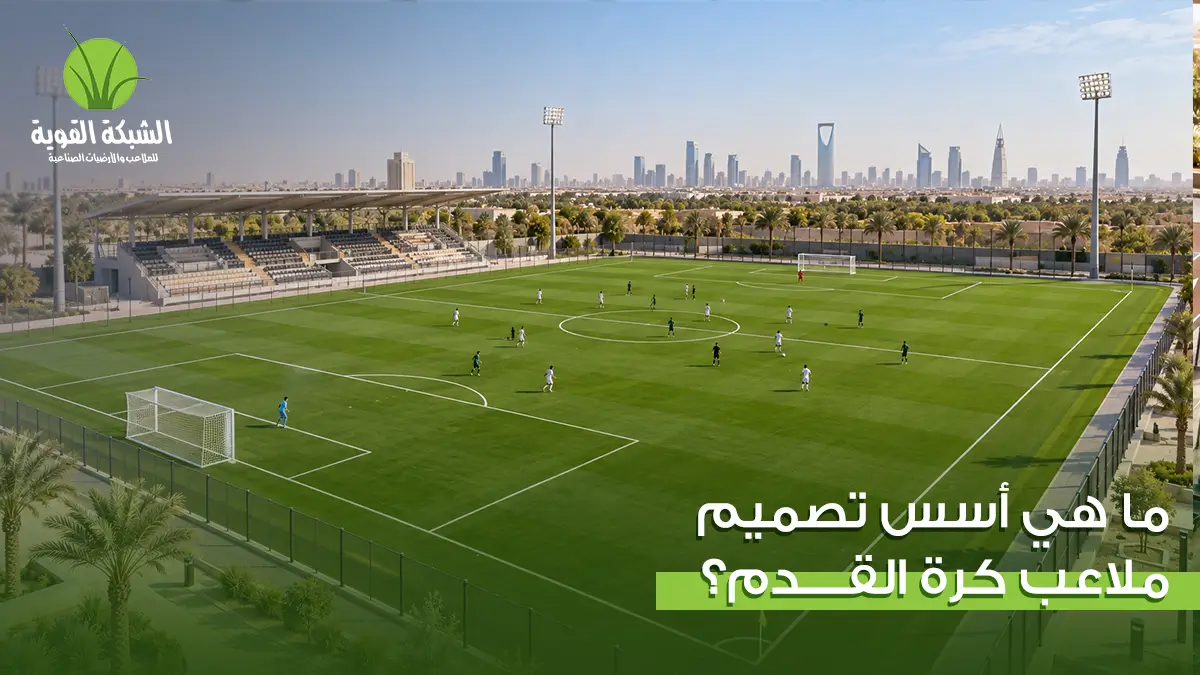
Field dimensions are among the most important elements of football field design, as the length and width must be determined according to the competition type and project requirements.
According to the official Laws of the Game, the field must be rectangular. The touchline length ranges between 90 and 120 meters, while the goal line width ranges between 45 and 90 meters for general matches, with specific ranges for international matches.
IFAB
Professional fields are commonly designed with dimensions close to 105 × 68 meters to provide a suitable playing area for high-level competitions.
FIFA Publications
Field design is not limited to length and width only. It also includes:
- Penalty area.
- Goal area.
- Center circle.
- Penalty mark.
- Field boundary lines.
Therefore, accurate measurements are one of the essential football field design principles to ensure the field matches the intended usage.
Choosing the Right Football Field Surface
The playing surface is one of the most important elements affecting field quality and player safety. Therefore, it should be selected based on usage frequency and climate conditions.
The most common football field surfaces include:
Natural Grass
- Commonly used in professional stadiums. It provides a natural playing experience and high-quality appearance but requires continuous care, irrigation, and regular maintenance.
Artificial Grass
Artificial grass is a practical option for many projects due to its ability to handle repeated use and reduce maintenance requirements compared to natural grass.
It is widely used in:
- Training fields.
- Schools.
- Sports academies.
- Community fields.
You can explore sports field projects completed by Al Shabaka Sports to view real examples of different construction solutions.
Why Is Infrastructure Preparation Important Before Building a Football Field?
One of the most important football field design principles is focusing on infrastructure preparation because it directly affects the field lifespan and performance quality.
Preparation work includes:
Ground Leveling and Preparation
- The site must be properly leveled and any soil issues should be addressed before installing the sports surface.
Drainage Systems
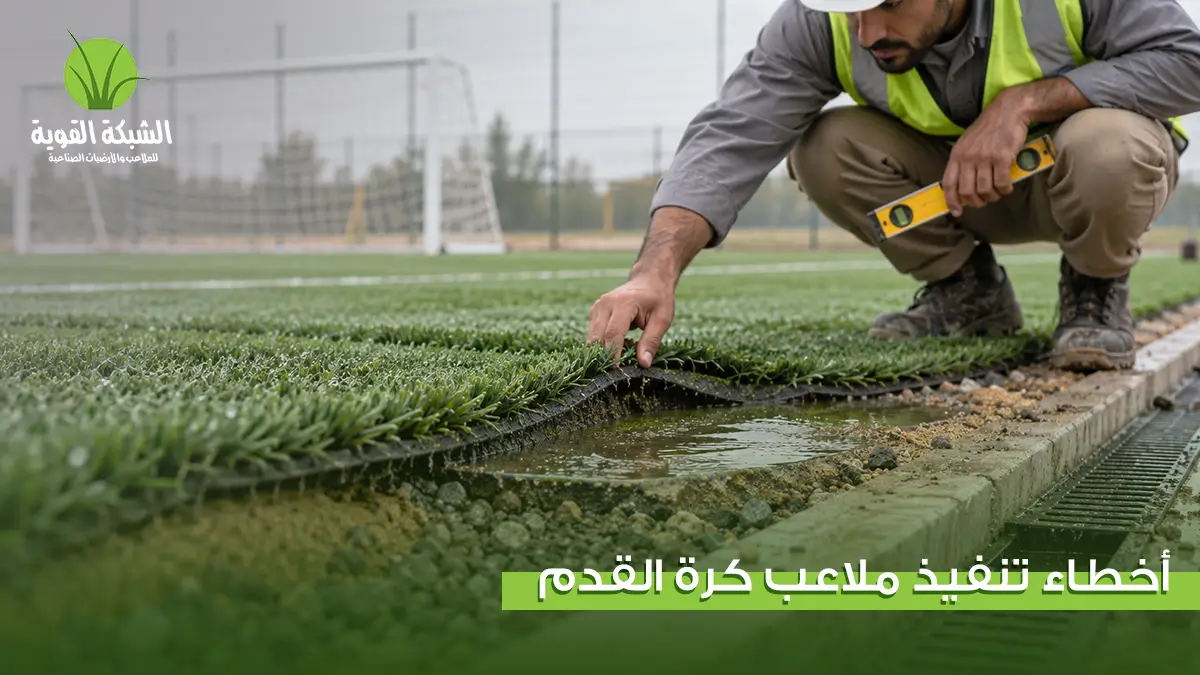
- A proper drainage system helps prevent water accumulation on the field, especially in outdoor areas exposed to rainfall or frequent use.
Foundation Layers
- Base layers are prepared beneath the surface to provide stability and withstand continuous usage.
Ignoring this stage may lead to problems such as uneven surfaces or early damage to the field.
What Equipment Is Required in Football Field Design?
A complete football field design does not depend only on installing the playing surface. It also requires essential equipment to improve the quality and safety of the facility, including:
- Football goals with suitable specifications.
- Safety nets around the field.
- Sports lighting systems.
- Player benches.
- Safety equipment.
- Scoreboards when required.
Additional facilities can also be added depending on the project requirements, such as stands, changing rooms, and supporting services.
Stages of Football Field Design and Construction
The process of creating a football field goes through several important stages:
Project Assessment and Planning
- The project objectives, available space, budget, and required specifications are identified before preparing the final design.
Site Preparation
- This stage includes leveling the ground, preparing foundation layers, and installing proper drainage systems.
Installing the Sports Surface
- The suitable surface system is selected and installed according to the field usage, whether natural grass or artificial grass.
Installing Final Equipment
- This includes installing goals, lighting systems, safety nets, and all required elements for field operation.
Testing and Handover
- The completed work is inspected to ensure quality standards are met before delivering the field for use.
Common Mistakes to Avoid in Football Field Design
Several mistakes can affect field quality and performance, including:
- Choosing an unsuitable surface for the intended usage.
- Ignoring soil assessment before construction.
- Poor drainage planning.
- Not providing sufficient safety areas around the field.
- Selecting a contractor based only on price.
Working with a specialized company helps ensure better execution quality and reduces future maintenance issues.
Why Do You Need a Specialized Company for Football Field Design?
Football field design requires technical expertise that combines engineering planning, suitable material selection, and proper installation according to sports standards.
Al Shabaka Sports provides integrated solutions for designing and constructing sports facilities, starting from site assessment and selecting the suitable surface system to complete field preparation.
The company’s experience helps achieve the right balance between construction quality, project requirements, and available budget.
You can explore Al Shabaka Sports sports field construction services and discover suitable solutions for your project.
Frequently Asked Questions About Football Field Design Principles?
What Factors Affect the Lifespan of a Football Field After Construction?
The lifespan of a football field depends on several factors, including material quality, ground preparation, surface type, usage level, and regular maintenance. Proper infrastructure preparation also helps maintain field quality for a longer period.
Can a Football Field Be Designed According to the Available Space?
Yes, a football field design can be customized according to the available area. The field type and equipment can be adjusted based on the project purpose, whether it is a training field, school facility, or sports project.
What Is the Difference Between a Training Field and a Professional Football Field?
A training field focuses on practical daily use and durability, while a professional football field requires higher specifications, advanced equipment, and compliance with international standards.